Odoo HR Module Guide: How to Streamline HR Processes
 Odoo
OdooIntroduction
Managing human resources efficiently has become a cornerstone of business success in today's competitive landscape. The Odoo HR Module offers a comprehensive solution that centralizes employee data, automates workflows, and transforms how organizations manage their workforce. From recruitment and onboarding to attendance tracking and performance evaluations, this powerful platform eliminates manual processes and provides real-time insights for strategic decision-making. In this guide, you'll discover how to leverage the Odoo HR Module to streamline your HR operations, enhance employee satisfaction, and drive organizational growth through digital transformation.
Key Takeaways
The Odoo HR Module centralizes all HR functions into one integrated platform, eliminating data silos and reducing administrative workload by up to 50%.
Automation features streamline attendance tracking, leave management, payroll processing, and performance evaluations for increased operational efficiency.
Successful implementation requires strategic planning, professional full-cycle Odoo implementation services, and alignment with your organizational objectives and workforce needs.
Understanding the Odoo HR Module
What Is the Odoo HR Module?
The Odoo HR Module is an enterprise-grade human resource management system designed to handle every aspect of workforce administration from a unified platform. It integrates seamlessly with other Odoo applications, creating a cohesive ecosystem where HR data flows effortlessly across departments.
This comprehensive solution provides tools for managing employee records, tracking attendance, processing payroll, evaluating performance, and handling recruitment processes. Organizations using this system report significant improvements in HR efficiency, with many reducing administrative time by 30-50% within the first six months of implementation. The platform's modular structure allows businesses to start with core features and expand functionality as their needs evolve, making it suitable for startups, SMEs, and large enterprises alike.
Why Businesses Choose Odoo for HR Management
Traditional HR systems often suffer from fragmentation, forcing teams to juggle multiple disconnected tools for different functions. The Odoo HR Module solves this challenge by providing an all-in-one solution that eliminates data duplication and manual transfers between systems.
The platform's open-source foundation offers unparalleled flexibility for Odoo Customization without vendor lock-in. Businesses benefit from transparent pricing models, extensive community support, and continuous feature updates. Integration capabilities with accounting, project management, and CRM modules create a truly unified business management system. For organizations in the UAE and globally, Codex ITNS provides expert guidance on implementing and optimizing the Odoo HR Module to match specific industry requirements and compliance standards. For organizations in the UAE and globally, Codex ITNS provides expert guidance through Odoo implementation services to optimize the HR module.
Core Features of the Odoo HR Module
Centralized Employee Database Management
Comprehensive Employee Profiles
The foundation of effective HR management lies in maintaining accurate, accessible employee information. The Odoo HR Module creates a centralized repository where all workforce data resides in one secure location, accessible to authorized personnel through role-based permissions.
The system stores personal details, contact information, emergency contacts, job positions, salary structures, employment contracts, and complete work histories with automatic version control. Managers can access employee records instantly, track career progression through visual timelines, and view organizational hierarchies through interactive charts. The module supports comprehensive document management, allowing HR teams to attach contracts, certifications, training records, and performance reviews directly to individual profiles. Advanced search and filtering capabilities enable quick segmentation by department, location, skill set, or custom criteria. This centralized approach eliminates spreadsheet chaos and ensures data accuracy across your entire organization.
Organizational Structure Visualization
Understanding reporting relationships and team structures becomes intuitive with built-in organizational chart tools. The system automatically generates visual hierarchies based on employee data, showing clear lines of authority and departmental structures. These dynamic charts update automatically when personnel changes occur, ensuring managers always have current organizational views for planning and decision-making purposes.
Attendance and Time Tracking
Flexible Clock-In Methods
Accurate time tracking forms the backbone of payroll accuracy and productivity monitoring. The Odoo HR Module offers multiple attendance recording methods to accommodate different workplace environments and employee needs.
Employees can clock in and out using web browsers, dedicated mobile applications, or integrated biometric devices for enhanced security. The system supports GPS-based check-ins for field workers and remote teams, while offline mode ensures data capture continues even without internet connectivity. Managers receive instant notifications about attendance anomalies, late arrivals, early departures, or missed clock-outs requiring attention.
Automated Working Hours Calculation
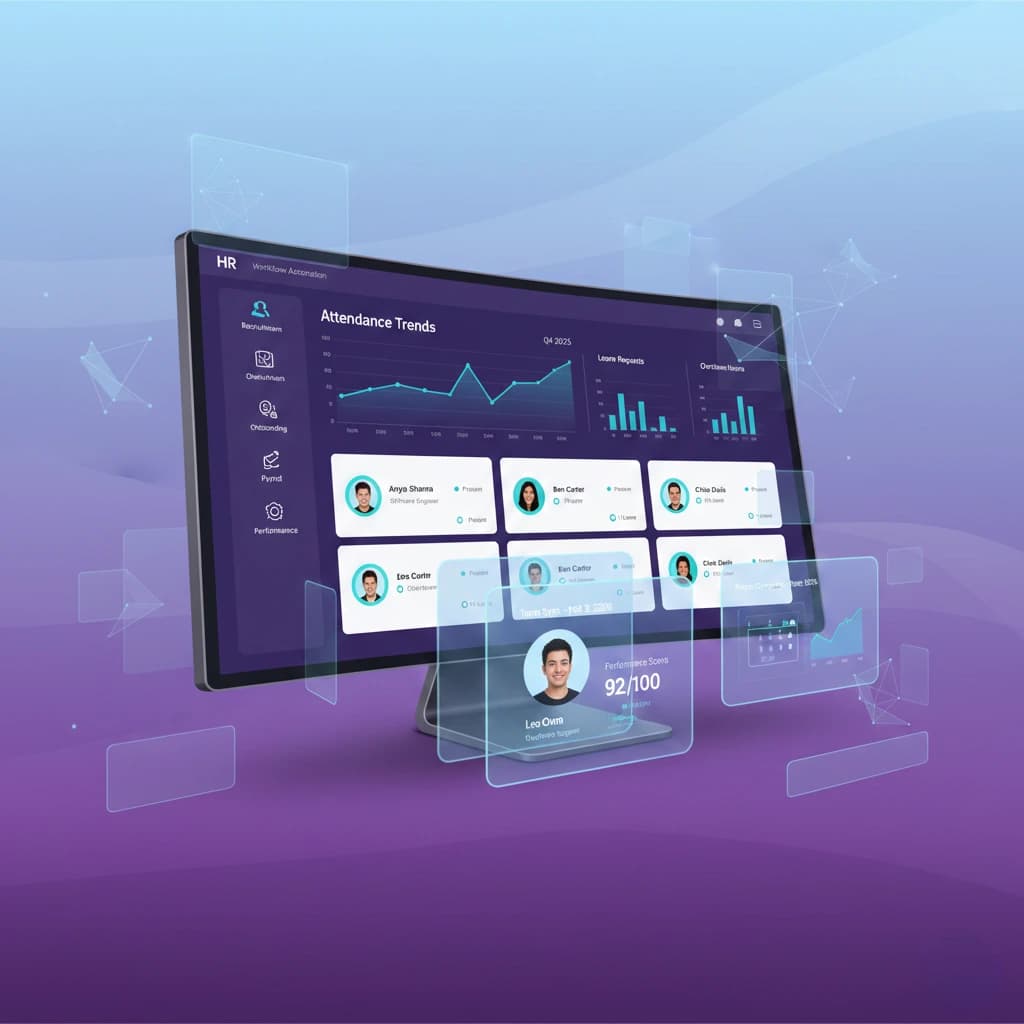
The module automatically calculates working hours, overtime, breaks, and shift differentials based on predefined schedules and company policies. It handles complex shift patterns including rotating schedules, split shifts, and flexible working arrangements. Integration with payroll modules ensures attendance data directly influences salary calculations, eliminating manual data entry and reducing processing errors by approximately 60%. Detailed reports provide insights into attendance trends, absenteeism rates, and productivity patterns across teams and departments.
Leave Management System
Streamlined Leave Request Process
Managing vacation requests, sick leaves, and time-off balances becomes effortless with Odoo's automated leave management functionality. The module handles the entire leave lifecycle from initial request submission through approval workflows to balance tracking and calendar updates.
Employees submit leave requests through intuitive self-service portals, selecting from multiple leave types configured according to company policies and legal requirements. The system automatically checks available balances, validates requests against team schedules and minimum staffing requirements, and routes approvals to appropriate managers based on predefined hierarchies. Automated notifications keep all stakeholders informed about request status changes, while calendar integration prevents scheduling conflicts and resource shortages.
Complex Leave Policy Support
The Odoo HR Module supports sophisticated leave policies including accrual rules, carry-forward limits, encashment calculations, and statutory requirements specific to different regions. HR teams can configure multiple leave types with distinct approval workflows, accrual frequencies, and eligibility criteria. Comprehensive reports show leave trends, department-wise utilization rates, upcoming absences, and potential resource constraints for proactive workforce planning.
Recruitment and Onboarding
End-to-End Recruitment Management
Attracting and integrating talent efficiently requires streamlined recruitment processes. The Odoo HR Module provides comprehensive recruitment management from job posting through candidate evaluation to final hiring decisions.
HR teams create detailed job listings with requirements, responsibilities, and company information, then publish them across multiple platforms including company websites, job boards, and social media channels. The system tracks applications in a centralized pipeline, automatically parsing resumes to populate candidate profiles. Collaborative hiring features enable team-based candidate assessments through structured evaluation forms and interview scorecards. Communication tools send automated responses to applicants and schedule interview appointments with calendar synchronization.
Systematic Onboarding Workflows
Once hired, the onboarding module creates automated task lists covering documentation collection, equipment assignment, system access provisioning, training schedules, and introductory meetings. New employees access welcome portals containing company policies, organizational charts, team introductions, and initial assignments. This systematic approach ensures consistent onboarding experiences, reduces time-to-productivity for new hires, and establishes clear expectations from day one. Integration with custom development services enables businesses to add industry-specific onboarding steps and compliance requirements.
Performance Management and Appraisals
Customizable Evaluation Frameworks
Regular performance evaluation drives employee development and organizational success. The Odoo HR Module facilitates structured performance management through flexible appraisal frameworks tailored to your organizational culture.
Organizations design multi-dimensional evaluation forms through Odoo customization, covering technical competencies, behavioural attributes, goal achievement, and leadership qualities. The system supports 360-degree feedback mechanisms, collecting input from managers, peers, subordinates, and even external stakeholders. Employees set SMART goals aligned with departmental objectives, tracking progress throughout evaluation periods with regular check-ins and milestone updates.
Continuous Performance Tracking
Automated reminders ensure timely completion of assessments without administrative burden, while analytics identify high performers, development needs, and succession planning candidates. The module maintains complete performance histories, enabling trend analysis over time and informed decisions about promotions, compensation adjustments, training investments, or career development paths. This data-driven approach replaces subjective evaluations with objective metrics that support fair and consistent talent management.
Benefits of Implementing the Odoo HR Module
Increased Operational Efficiency
Automation of Repetitive Tasks
Automation eliminates time-consuming manual tasks, allowing HR professionals to redirect efforts toward strategic initiatives that drive business value rather than administrative paperwork.
By centralizing data and automating workflows, organizations typically reduce HR processing time by 30-50% within the first year of implementation. The system eliminates duplicate data entry across multiple platforms, minimizes paper-based processes, and accelerates approval workflows through automated routing. Self-service portals empower employees to update personal information, request leaves, access payslips, and download documents independently, significantly reducing the burden on HR staff for routine inquiries.
Real-Time Visibility and Reporting
Real-time dashboards provide instant visibility into key metrics without manual report compilation or spreadsheet manipulation. These efficiency gains translate directly into cost savings and enable HR teams to focus on talent development, culture building, employee engagement, and strategic workforce planning that drives sustainable business growth.
Enhanced Data Accuracy and Compliance
Built-In Validation and Audit Trails
Maintaining accurate employee records and ensuring regulatory compliance becomes significantly easier with automated systems and built-in validation rules that prevent data entry errors.
The Odoo HR Module enforces data consistency through mandatory fields, format validation, range checks, and automated calculations that eliminate human error. Comprehensive audit trails track all changes to employee records, documenting who made changes, when modifications occurred, and what values changed, creating accountability and supporting compliance investigations or dispute resolutions.
Regulatory Compliance Management
The system automatically applies labor laws, tax regulations, and company policies to leave accruals, overtime calculations, contract renewals, and benefit eligibility. Regular system updates ensure compliance with changing regulations across different jurisdictions, particularly important for organizations operating in multiple regions. Document management features maintain organized records of certifications, licenses, training completions, and acknowledgments required for regulatory audits. This systematic approach reduces compliance risks and protects organizations from costly penalties, legal disputes, or reputational damage.
Better Decision-Making Through Analytics
Comprehensive Workforce Insights
Data-driven insights transform HR from a support function into a strategic business partner. The Odoo HR Module provides comprehensive analytics that inform critical organizational decisions.
Customizable dashboards visualize workforce trends including turnover rates, recruitment effectiveness, training ROI, compensation benchmarking, and departmental productivity metrics. Predictive analytics identify potential retention risks before employees resign, enabling proactive intervention through targeted engagement initiatives or compensation adjustments. Cost analysis tools break down HR expenses by department, position, project, or cost center, supporting accurate budgeting and resource allocation decisions.
Strategic Workforce Planning
Benchmarking features compare your metrics against industry standards and historical performance, highlighting areas requiring improvement or investment. These insights support strategic workforce planning, help justify HR investments to leadership, and demonstrate the department's quantifiable contribution to organizational success. When combined with professional Odoo consultation services, businesses can configure advanced analytics specifically tailored to their strategic priorities and key performance indicators.
Implementation Strategy for Odoo HR Module
Assessment and Planning Phase
Current State Analysis
Successful implementation begins with thorough assessment of your current HR processes, pain points, and future requirements. Document existing workflows, identify inefficiencies, and understand gaps in your current systems that prevent optimal HR operations.
Define clear objectives for your implementation, establishing measurable success criteria such as reduced processing time, improved data accuracy, enhanced employee satisfaction scores, or decreased turnover rates. Assemble a cross-functional implementation team including HR professionals, IT staff, department representatives, and executive sponsors who can provide strategic direction and remove organizational barriers.
Roadmap Development
Create a realistic implementation timeline accounting for requirements gathering, system configuration, data migration, integration development, testing cycles, training programs, and phased rollout strategies. Budget appropriately for software licensing, infrastructure requirements, customization needs, integration costs, and professional services. Engaging experienced full-cycle implementation providers early in this phase ensures your implementation roadmap addresses both immediate operational needs and long-term scalability objectives.
Configuration and Customization
System Configuration
Tailoring the Odoo HR Module to your organizational requirements maximizes user adoption and operational effectiveness. Start with core configurations defining your company structure, leave policies, approval hierarchies, and workflow rules.
Configure employee categories, job positions, departments, locations, and reporting relationships that accurately mirror your organizational chart. Set up leave types with specific accrual rules, carry-forward policies, maximum balance limits, and approval workflows matching your HR policies and legal requirements. Customize employee data fields to capture information specific to your industry, compliance requirements, or management needs.
Advanced Customization Options
Design appraisal templates reflecting your performance management philosophy, evaluation criteria, and organizational competencies. Consider custom development and system integrations for unique requirements such as specialized reports, integration with legacy systems, biometric device connectivity, or industry-specific workflows. Proper configuration during this phase prevents the need for disruptive changes after go-live and ensures the system supports your processes rather than forcing process changes to accommodate software limitations.
Data Migration and Testing
Data Preparation and Migration
Transferring existing employee data accurately is critical for implementation success. Develop a comprehensive data migration strategy that ensures completeness, accuracy, and maintains historical information where required.
Clean your current data by removing duplicates, correcting inconsistencies, standardizing formats, and validating critical information before migration. Map legacy data fields to corresponding Odoo fields, handling structural differences and data transformations appropriately. Migrate data in phases, starting with master data like employee records and organizational structures, followed by transactional data including leave balances, attendance history, and performance records.
Comprehensive Testing Protocols
Conduct thorough testing using realistic scenarios that mirror daily operations across different user roles and business processes. Validate data accuracy by comparing migrated records against source systems through sample checks and reconciliation reports. Test all workflows including leave requests, attendance tracking, performance reviews, and recruitment processes with actual end users providing feedback. Address any issues discovered during testing before proceeding to production deployment. This methodical approach minimizes disruption and builds user confidence in the new system from day one.
Training and Change Management
Comprehensive Training Programs
User adoption determines implementation success more than technical configuration. Develop a comprehensive training program addressing different user roles, skill levels, and learning preferences.
Create role-specific training covering features relevant to employees, managers, HR administrators, and executives. Combine various training methods including hands-on workshops, video tutorials, quick reference guides, job aids, and searchable knowledge bases. Establish a network of super-users who receive advanced training and serve as first-line support for their departments, creating internal expertise and reducing dependence on external support.
Effective Change Management
Communicate implementation benefits clearly, addressing concerns proactively and highlighting how the system improves individual workflows rather than creating additional work. Provide adequate time for users to practice in test environments before going live with production data. Plan for ongoing training as you roll out additional modules, features, or process improvements. Effective change management transforms potential resistance into enthusiasm, ensuring your technology investment delivers maximum value through widespread adoption and proper utilization across the organization.
Conclusion
The Odoo HR Module transforms human resource management by centralizing data, automating workflows, and providing actionable insights that drive organizational success. From streamlining recruitment and onboarding to managing performance evaluations and ensuring compliance, this comprehensive platform addresses every aspect of workforce administration with efficiency and precision. Successful implementation requires careful planning, proper configuration, effective change management, and ongoing optimization to ensure user adoption and maximize return on investment. By following best practices and partnering with experienced professionals for implementation, support, and Odoo customization, businesses can create efficient HR operations that support growth, enhance employee satisfaction, and deliver measurable business value in today's competitive landscape.
Ready to transform your HR operations? Contact Codex ITNS today to discover how we can help you implement and optimize the Odoo HR Module for your organization's unique needs and strategic objectives.
Frequently Asked Questions
1. What is the Odoo HR Module used for?

The Odoo HR Module manages employee data, attendance tracking, leave requests, payroll processing, recruitment, and performance evaluations. It centralizes all HR functions into one integrated platform, automating workflows and providing real-time insights for better workforce management and operational efficiency.
2. How does the Odoo HR Module improve HR efficiency?
The Odoo HR Module automates repetitive tasks like attendance tracking, leave approvals, and payroll calculations. It eliminates manual data entry, reduces processing time by 30-50%. It also provides self-service portals that empower employees to manage their information independently.
3. Can the Odoo HR Module be customized for specific business needs?
Yes, the Odoo HR Module offers extensive customization options. Businesses can configure leave policies, appraisal templates, approval workflows, and employee data fields. Codex ITNS as an experienced Odoo partner in Dubai helps tailor the module to match unique organizational requirements and industry-specific standards.
4. What are the key features of the Odoo HR Module?
Key features include centralized employee database management and automated attendance and time tracking. The module also supports leave management systems, recruitment pipelines, onboarding workflows, performance appraisals, and expense management. Additionally, comprehensive analytics dashboards provide workforce insights for strategic decision-making.
5. How long does it take to implement the Odoo HR Module?
Implementation typically takes 4-12 weeks depending on company size, customization requirements, and data migration complexity. Comprehensive post-go-live support and maintenance ensures proper planning, configuration, testing, and training for successful deployment and smooth user adoption.
6. Is the Odoo HR Module suitable for small businesses?
Absolutely. The Odoo HR Module scales to fit businesses of all sizes. Small companies can start with basic features and expand functionality as they grow. Its flexible pricing model and modular structure make it cost-effective for startups and SMEs.
7. Does the Odoo HR Module integrate with payroll systems?
Yes, the Odoo HR Module integrates seamlessly with Odoo Payroll and third-party payroll systems. Attendance data, leave records, and overtime calculations automatically flow into payroll processing, eliminating manual data transfer and ensuring accurate salary computations with reduced errors.
8. What is the cost of implementing the Odoo HR Module?
Implementation costs vary based on company size, required customizations, number of users, and deployment type (cloud or on-premise). Codex ITNS offer tailored quotes after assessing specific business requirements and integration needs for your organization.
9. How secure is employee data in the Odoo HR Module?
The Odoo HR Module employs enterprise-grade security including role-based access controls, data encryption, audit trails, and regular security updates. It complies with international data protection regulations like GDPR, ensuring employee information remains confidential and protected from unauthorized access.
10. Can employees access the Odoo HR Module remotely?
Yes, employees can access the Odoo HR Module through web browsers and mobile apps from anywhere. The HR & ESS solution enables attendance check-ins, leave requests, document viewing, and timesheet submissions, ideal for distributed teams and hybrid work environments.